Business Intelligence and Market Performance: 943942631, 8556870290, 960661578, 911094166, 6944487208, 252555575
Business Intelligence (BI) significantly influences market performance by transforming raw data into actionable insights. Organizations leverage BI to enhance decision-making, optimize customer segmentation, and anticipate market trends. As companies adopt predictive analytics and data visualization, their agility in responding to shifts in consumer behavior improves. This raises questions about the effectiveness of current BI strategies and their impact on future competitiveness. What innovations in BI will shape market dynamics in the years to come?
The Role of Business Intelligence in Data-Driven Decision Making
Business intelligence (BI) serves as a critical component in the realm of data-driven decision making, enabling organizations to harness vast amounts of data for strategic advantage.
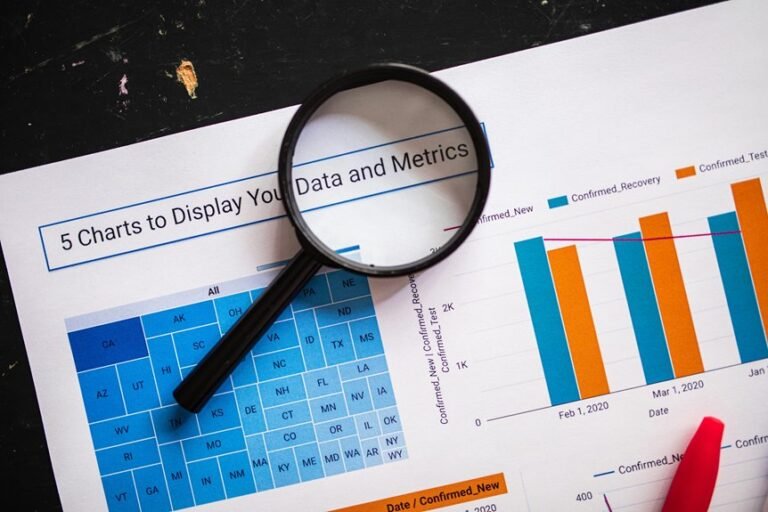
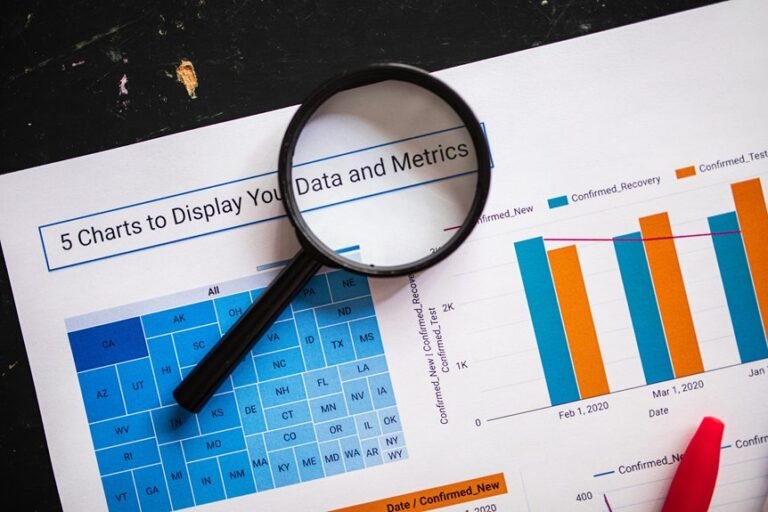
Through effective data visualization, complex datasets are transformed into interpretable formats that facilitate understanding.
Additionally, predictive analytics empowers businesses to forecast trends, enhancing their ability to make informed decisions that align with market demands and opportunities.
Key Metrics for Evaluating Market Performance
Effective evaluation of market performance relies on a set of key metrics that provide insights into a company’s competitive standing and financial health.
Critical indicators include market share, which reflects a firm’s dominance, revenue growth indicating expansion, customer satisfaction assessing loyalty, competitive analysis benchmarking against rivals, profitability ratios measuring financial efficiency, and sales performance gauging effectiveness in converting prospects into customers.
Real-World Examples of Business Intelligence Impact
Although many organizations recognize the potential of business intelligence (BI) to enhance strategic decision-making, few fully grasp its transformative impact on market performance until they observe tangible results.
For instance, companies implementing customer segmentation and predictive analytics have improved sales forecasting accuracy, while data visualization tools have bolstered competitive analysis.
This integration fosters operational efficiency, ultimately positioning organizations for enhanced market performance.
Future Trends in Business Intelligence and Market Growth
As organizations increasingly harness the power of data, the future of business intelligence (BI) is poised to redefine market growth trajectories.
Predictive analytics and AI integration will enhance customer insights, while data visualization and cloud solutions facilitate real-time market segmentation.
Additionally, automation trends and competitive analysis are set to streamline operations, enabling companies to respond swiftly to dynamic market conditions and achieve sustainable growth.
Conclusion
In conclusion, the integration of Business Intelligence significantly enhances market performance by facilitating data-driven decision-making. A striking statistic reveals that organizations utilizing BI tools can experience up to a 127% return on investment, underscoring the financial impact of actionable insights. As firms increasingly leverage predictive analytics and data visualization, they position themselves to adapt swiftly to market dynamics, fostering innovation and maintaining a competitive edge in an ever-evolving landscape.