Machine Learning: A Way to Make Progress Across Industries
Machine learning is no longer a side project. It’s built into how industries solve problems, respond to data, and make decisions.
From improving logistics to refining customer experiences, this technology helps systems respond more quickly and accurately. The real value lies in how it solves problems as they happen, helping businesses adapt without slowing down.
Increased Personalization
One of the most practical outcomes of machine learning is better personalization. Systems can adjust in real time, using past behaviour and current activity to shape what a user sees.
Instead of offering the same layout or options to everyone, platforms can respond to patterns as they form. When experiences align with personal habits, satisfaction tends to rise.
Personalization can lift the quality of any established platform. Take MrQ Casino as an example. It is already recognised as a reliable name in the online casino industry. If machine learning were used to refine game suggestions or tailor offers based on individual play history, the experience could become more focused and efficient. Users would engage with content that reflects their preferences rather than browsing through broad selections.
This would work because it has already shown results in other sectors. Spotify, for example, builds playlists around listening history and recent activity, adjusting recommendations as tastes change. The system responds quietly in the background, keeping the service aligned with user behaviour.
Efficiency in Manufacturing
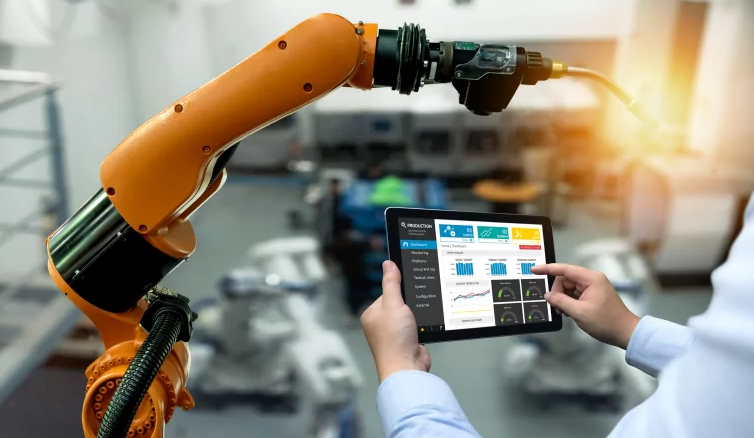
Manufacturers are under pressure to deliver faster while using fewer resources. Machine learning helps by processing real-time data from factory equipment to detect early signs of wear or failure.
Instead of waiting for something to break, the system flags unusual patterns, such as changes in vibration or temperature, so repairs can be made before real damage occurs. This kind of early action cuts downtime and keeps production moving.
It also helps with overall flow. Machine learning can adjust speeds, shift resources, or manage stock levels in real time.
Safety in Autonomous Vehicles
Driving involves constant, rapid decisions. For autonomous vehicles, machine learning makes that possible.
It enables the system to process camera and sensor inputs in real time, identifying lanes, traffic signs, pedestrians, and unexpected obstacles within moments. These aren’t scripted responses. The system is trained to interpret complex environments and select actions such as braking, turning, or adjusting speed as conditions change.
This speed and accuracy are exactly where machine learning becomes critical. Unlike rule-based systems, which follow fixed instructions, machine learning adapts.
That training is intense. It draws from millions of miles of driving data, covering every kind of weather and traffic scenario. Simulation helps refine the model, but the goal remains the same: to make consistent, fast decisions, even in edge cases. Without machine learning, that level of responsiveness simply wouldn’t be possible.
Healthcare Decisions
In medicine, timing is critical, and machine learning is playing an increasing role in helping doctors act quickly.
This is more than automation; it’s a shift in how risk is detected. A pattern in a heartbeat or a subtle change in scan results might go unnoticed in the middle of a busy ward, but not by a trained model watching for it.
What makes machine learning essential here is its ability to handle volume and variation. A doctor can focus on a few patients at a time; an algorithm can monitor hundreds in parallel, looking for early signs of deterioration.
Diagnosis is another area where the impact is clear. Algorithms compare scans against vast medical image libraries to find possible matches or flag anomalies. This speeds up the process without lowering standards. In smaller clinics or remote regions, portable devices equipped with these models can deliver accurate assessments when expert review is not available.
Overcoming Implementation Challenges
Getting machine learning to work in real settings isn’t always simple. The models rely on clean, reliable data, and collecting that takes time, planning, and the right infrastructure. If the input is messy or incomplete, the system produces weak results. That’s why data quality isn’t a side task; it’s core to everything else.
Privacy is another concern. Many industries handle sensitive information, and using machine learning means handling that data properly.
Secure storage, clear consent policies, and compliance with legal standards aren’t optional; they shape whether a project can move forward. And then there’s the matter of integration. Many systems still run on legacy software, so updates must occur in stages. Despite the friction, most of these hurdles have workarounds, but they need to be planned for from the start.
Real Progress, Not Hype
New approaches are starting to shift where and how data is processed. With edge computing, responses can be processed directly on local devices, reducing latency between input and action. That matters for wearables, medical devices, and anything that needs to respond quickly.
At the same time, there’s more attention on how these systems are built. Bias, access, and accountability are finally getting space in the conversation.
Open-source libraries are giving smaller teams the tools to experiment without major funding.
These changes are part of a larger shift, one in which machine learning moves from a specialised layer to being built into everyday systems. That’s where the real progress is: in solving practical problems, without losing sight of what makes a solution worth trusting.