Automatic Bollards in Urban Security: Managing Access in High-Risk Areas
Automatic Bollards and Their Role in Urban Security Strategies
As cities expand and public spaces become increasingly complex to manage, the need for advanced access control systems continues to grow. In this context, automatic bollards are gaining relevance as a practical solution to regulate vehicle access in high-risk and high-traffic areas.
From city centers to critical infrastructures, these systems are now considered an essential component of modern security planning.
Addressing Security Challenges in Public Spaces
Urban environments today face multiple challenges: unauthorized vehicle access, traffic congestion, and the need to protect pedestrians in crowded areas. Traditional barriers often fall short in balancing security with operational flexibility.
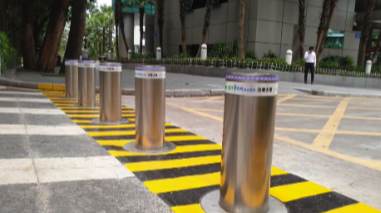
Automatic bollards provide a dynamic response to these challenges. Installed flush with the ground, they can remain invisible when lowered and quickly rise when needed, creating an immediate physical barrier against vehicles.
This ability to adapt in real time makes them particularly effective in areas where access requirements frequently change throughout the day.
Use Cases in High-Security and Sensitive Locations
The deployment of automatic bollards is especially common in locations where controlling vehicle access is critical. These include:
- Government and institutional buildings, where perimeter protection is essential
- Airports and transportation hubs, to manage restricted zones
- Historic city centers, where pedestrian safety must be preserved
- Event venues, requiring temporary but effective access control
In such contexts, the combination of automation and reliability becomes a key factor in ensuring both safety and operational continuity.
Integration with Access Control Systems
One of the most relevant aspects of automatic bollards is their ability to integrate with broader security ecosystems. They can be connected to:
- Badge readers and RFID systems
- License plate recognition technologies
- Remote control panels and centralized management software
This integration allows operators to manage access efficiently, reducing manual intervention and improving response times.
Companies like MAC, active in the field of vehicle access control, develop solutions that align with these integration needs, supporting both standalone installations and complex security infrastructures.
Balancing Security and Urban Design
While security remains the primary objective, urban planners and architects also consider the visual impact of infrastructure. Automatic bollards are often designed to blend seamlessly into their surroundings, preserving the aesthetic quality of public spaces.
This makes them particularly suitable for historic or architecturally sensitive areas, where traditional barriers might be visually intrusive.
A Growing Role in Future Cities
As cities move toward smarter and more connected systems, automatic bollards are expected to play an even more significant role. Their compatibility with digital control systems and their ability to respond to real-time data make them a valuable asset in the development of smart urban environments.
In this evolving landscape, automatic bollards are no longer just a security feature—they are becoming a strategic tool for managing access, mobility, and safety in modern cities.