Choosing Body Scanners and Radiation Detectors for Security Screening
Security screening helps teams identify potential threats before people, vehicles, or cargo enter sensitive areas. Body scanners and radiation detectors serve different purposes, but both turn signals that are difficult to see directly into information operators can assess.
Security screening starts with spotting risks early
Airports, border crossings, ports, government buildings, and critical infrastructure all need ways to check for concealed hazards. The right screening approach depends on what is being inspected, the likely risks, and how people and goods move through a checkpoint.
Full body scanners are designed to help operators find items concealed on a person. Radiation monitoring systems look for radioactive materials or unusual radiation levels. These tools support security procedures, but their alerts need to be assessed by trained staff.
See also: Cybersecurity in the Modern Age: Protecting Your Digital Life
Radiation detectors turn invisible signals into useful alerts
Radiation cannot be identified by sight alone, so monitoring equipment measures signals and presents results for operators to review. Some systems can also help identify radionuclides, which are radioactive forms of elements.
A rad detector may be used at a border crossing, airport, port, power plant, or other sensitive site. The exact equipment depends on whether staff need to screen pedestrians, vehicles, baggage, cargo, or the surrounding environment.
Handheld devices help teams check suspicious items
Portable monitors can help staff investigate a location, item, or radiation alert. Depending on the device, capabilities may include passive gamma detection, source searches, dose-rate measurement, and radionuclide identification. Some models can also include a neutron detector.
Handheld equipment is useful when a fixed checkpoint is not practical or when a team needs to follow up on a reading. It does not replace a planned screening process, and operators need suitable training to interpret measurements and respond appropriately.
Portal monitors scan people and vehicles as they pass
Portal monitors are positioned along a route so they can check people or vehicles as they pass through. Different configurations can be designed for pedestrian screening, baggage, vehicles, cargo, or trains. Fixed systems can also support continuous monitoring at selected sites.
For example, a pedestrian portal is suited to people moving through a checkpoint, while larger vehicle monitors can screen traffic or cargo. If a system detects an unusual signal, staff may carry out a secondary inspection using other equipment and procedures.
Different technologies catch different kinds of threats
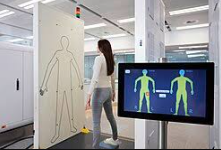
Body scanners and radiation detectors are not interchangeable. Full body scanners use imaging technologies to help reveal concealed objects on a person. Depending on the system, these may include low-dose X-ray transmission, millimeter waves, or terahertz signals.
Radiation monitors measure radiation rather than producing an image of concealed objects. Some are designed to detect gamma radiation, and optional neutron detection can support the search for certain shielded nuclear materials. The technology used should match the threat being assessed.
Screening systems can have different operating requirements, levels of automation, and inspection workflows. Product descriptions alone do not establish how well a device performs in every setting. Buyers should review relevant approvals, operating guidance, privacy considerations, and independent evidence where available.
Smart procedures make screening faster and safer
Effective screening depends on more than equipment. Checkpoint layout, staff training, clear escalation steps, and regular maintenance all affect how consistently a system can be used. Procedures should explain what happens when an alert appears and who is responsible for deciding on further checks.
Teams can also reduce delays by matching equipment to the flow of people and goods. A walk-through system may suit a pedestrian entrance, while portable monitors and vehicle portals serve different inspection needs. Regular review helps keep the process practical without treating every alert as a confirmed threat.
Security technology works best as part of a layered approach. Imaging systems, radiation monitoring, staff judgment, and follow-up inspections each have a distinct role in identifying risks and protecting sensitive locations.